
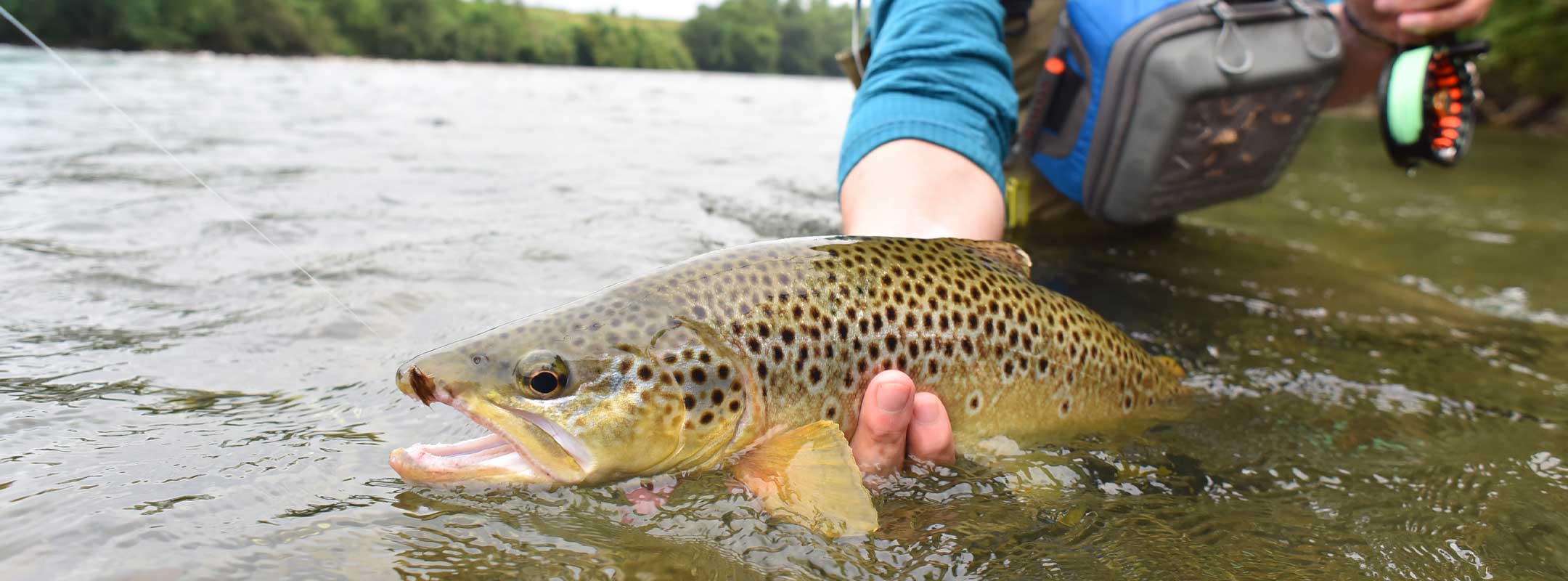
Euro fly fishing has transformed the way anglers approach nymphing. Originally developed from Czech and Spanish competition styles, Euro nymphing has carved a niche in the hearts of anglers around the globe. This article covers the history, key techniques, and the flies that make it work.
Euro nymphing has transformed the way anglers approach fast, deep water. Where traditional fly fishing methods struggled, the precision and sensitivity of Euro techniques excels. Here's what you need to know.
The Origins of Euro Nymphing
In the late 20th century, European competition anglers began developing an innovative approach to nymphing. Originating primarily in the Czech Republic, the style was designed for catching fish in swift, deep water where traditional presentations made little impact. Spanish anglers further refined the methods, contributing tactical variations for different aquatic environments. The common thread: accurate, efficient nymph presentation with minimal line on the water.
Key Euro Nymphing Techniques
Light Tackle and Tungsten Beads
Euro nymphing relies on lightweight tackle for stealthy presentations. Tungsten beads are essential — their density gets flies down quickly in fast-moving water, right into the feeding zone where fish are actively holding.
Dead Drift Presentation
Maintaining a drag-free drift is the foundation of Euro nymphing. The goal is to let the nymph drift naturally with the current, closely mimicking the behavior of real drifting insects. Any unnatural drag kills the presentation.
High Stick Nymphing
Keeping the rod high minimizes line drag while maintaining tension on the nymph. This dramatically improves strike detection — you feel takes that would be invisible with a traditional indicator setup — and keeps the fly tracking precisely through the feeding lane.
Top Euro Nymphing Flies
Selecting the right flies is critical. Here are three proven patterns for Czech and Spanish nymphing.
Tactical Hares Ear Czech Nymph — Hook Size 12

A hand-tied Czech nymph built specifically for Euro nymphing. The black tungsten bead ensures rapid sinking in fast water, the jigged hook rides point-up to reduce snags and improve hook-ups, and the compact profile works across a wide range of conditions. A go-to pattern for deeper runs and pocket water.
Black Perdigon Tactical Jig — Hook Size 14

A staple in competitive Euro nymphing, the Perdigon's slick UV-coated finish cuts through the water column faster than almost any other pattern. The jig hook design ensures effective hook penetration and a point-up swim angle. Works equally well as a point fly or the bottom fly in a two-nymph rig.
Duracell Jigged Czech Nymph — Hook Size 14

Built using traditional Czech methods, the Duracell's hot orange and black color combination is a proven fish-attractor in off-color or high water. The tungsten bead delivers direct delivery to feeding zones, and the minimal resistance design provides a natural, efficient drift. A reliable choice for both competitive and leisure anglers.
Frequently Asked Questions
What is Euro nymphing?
Euro nymphing is a modern fly fishing technique emphasizing precision nymph presentation with minimal fly line on the water, developed from Czech and Spanish competition styles.
Why are tungsten beads important?
Tungsten is denser than brass, allowing flies to sink faster to the target depth in fast-moving water — keeping your fly in the feeding zone longer on every drift.
What's the difference between Czech and Spanish nymphing?
Czech nymphing typically uses heavier, more compact flies fished at close range in fast pocket water. Spanish nymphing tends toward lighter flies and longer leaders for covering more water at distance. Both share the core dead-drift, tight-line approach.
What flies work best for Euro nymphing?
Tungsten bead jig nymphs are the foundation — patterns like the Tactical Hares Ear, Perdigon, and Duracell are proven producers. Match weight and size to current speed and depth.
Ready to gear up for Euro nymphing? Browse our full Euro Tactical Nymphs Collection — barbless jigged flies, Czech nymphs, Perdigons, and more for precision nymphing in any water.
1 comment
Ann
Great read! I had never fished with euro nymphs before. Was lucky enough to get your collection as a gift. Can’t wait to get out on the water. Tight lines!!!