Crooked River Oregon Hatch Chart
Central Oregon, below Bowman Dam near Prineville in Crook County. The Crooked River is one of the most productive and accessible tailwaters in the Pacific Northwest: a cold, narrow river in a high-desert basalt canyon east of the Cascades. Bowman Dam creates year-round trout water in an otherwise warm, arid basin. The best fishing is the canyon reach just below the dam, where wild redband rainbows are dense and midges are the year-round backbone of the fishery. Flows are dam-regulated, not natural. Winter water can be low and stable. Summer irrigation releases and occasional flood-control pulses can raise the river quickly. Check the Bowman Dam outflow before you go.
Check current Oregon Department of Fish and Wildlife regulations before you go. Below Bowman Dam the Crooked River is open all year. Central Zone stream rules apply: artificial flies and lures only, and 2 trout per day. Rainbow trout over 20 inches may not be harvested and should be treated as steelhead. Mountain whitefish are common. Bull trout may now appear after volitional passage at Opal Springs; release them unharmed and report the catch as ODFW directs. An Oregon fishing license is required.
Shop by type: dry flies, nymphs, Euro nymphs, hoppers and terrestrials, streamers.

The river
The Crooked River below Bowman Dam is a tailwater first and a long desert river second. The core fishery is the canyon immediately below the dam, roughly 8 miles of cold water along Highway 27 through the Chimney Rock Wild and Scenic segment. That stretch is narrow, about 20-40 feet wide, and wades well when flows are in a workable range. Most of the best water is reachable from the road. No raft is required. Downstream of that canyon the river continues many miles through ranch country, Smith Rock, and the Crooked River National Grassland before it reaches Lake Billy Chinook. That lower water fishes differently and is not the same as the dam tailwater.
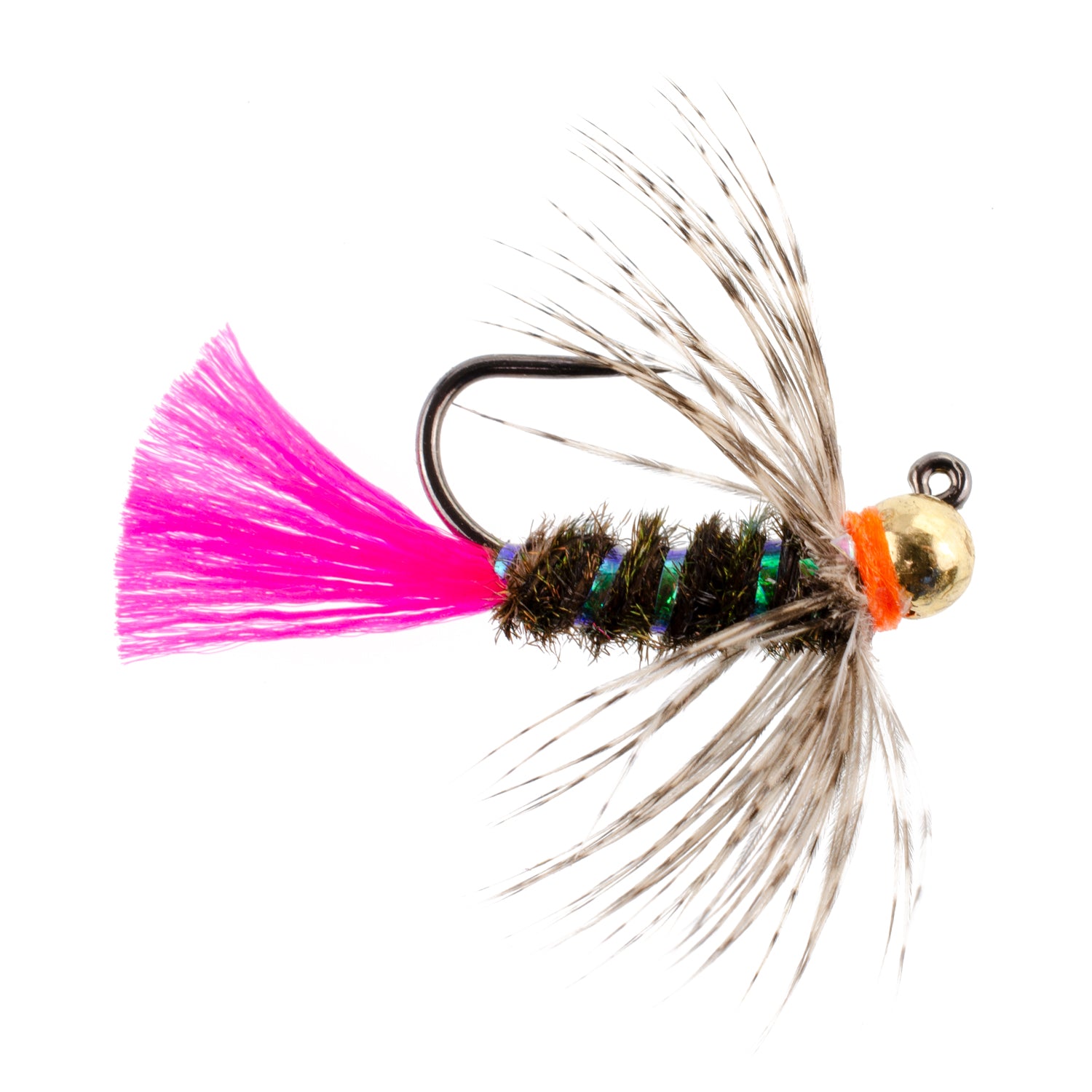
Wild redband rainbow trout are the main target: a Columbia Plateau native adapted to cold, alkaline water. Fish in the upper canyon often average 10-14 inches, with larger fish in the deeper slots. Densities just below the dam are among the highest in Oregon. Mountain whitefish are also abundant and take the same small nymphs. The Crooked does not draw Deschutes-level crowds, which is part of its value, but it is not an overlooked secret either. Pressure is highest on summer weekends near the campgrounds. Midges, scuds, and small mayfly nymphs produce when nothing is hatching. Even when BWO, caddis, or hoppers are on the surface, a midge or scud dropper is usually worth fishing.
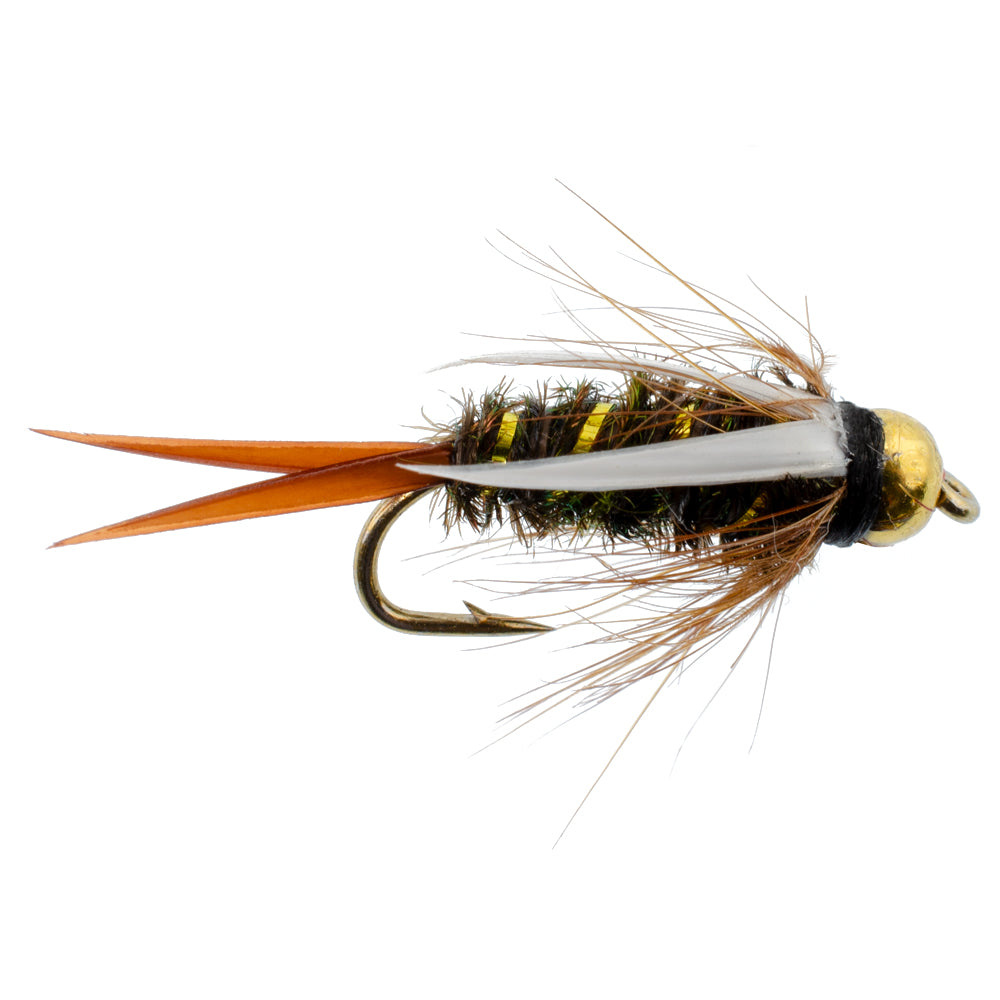
Midges are the backbone of the Crooked River's food chain year-round and should be in every angler's box regardless of season. Even when BWO, caddis, or hoppers are the visible hatch, a midge dropper below a dry fly is almost always worth carrying. The river also produces outstanding BWO hatches in spring and fall, a reliable evening caddis hatch from late spring through summer, and good hopper fishing along the basalt canyon walls through July and August. The upper canyon sections near the dam fish best in summer due to the cooling effect of the dam release - an important detail when planning a midsummer visit.
Year at a glance
| Month | Primary hatches | Also carry | Typical sizes |
|---|---|---|---|
| Jan | Midges | Small nymphs | Midge 20-26 |
| Feb | Midges, BWO | Small nymphs | Midge 20-24, BWO 18-22 |
| Mar | BWO, midges | Early caddis | BWO 16-20, midge 20-24 |
| Apr | BWO, caddis, midges | March brown | BWO 16-20, caddis 14-16 |
| May | Caddis, PMD, BWO | Yellow sally, midges | Caddis 14-16, PMD 16-18 |
| Jun | Caddis, PMD, yellow sally | Hoppers start, midges | Caddis 14-16, PMD 16-18 |
| Jul | Hoppers, caddis, PMD | Yellow sally, ants, midges | Hopper 8-12, caddis 14-16 |
| Aug | Hoppers, caddis, trico | Ants, beetles, midges | Hopper 8-12, trico 20-24 |
| Sep | BWO, mahogany dun, caddis | Hoppers, midges | BWO 16-20, midge 20-24 |
| Oct | BWO, midges | October caddis, mahogany dun | BWO 16-20, midge 20-24 |
| Nov | Midges, BWO | Small nymphs | Midge 20-24, BWO 18-22 |
| Dec | Midges | Small nymphs | Midge 20-26 |
January - February
The Crooked River is one of the finest winter midge fisheries in Oregon and January and February are among the most productive months for the angler willing to fish the high-desert canyon in cold conditions. Stable dam-release temperatures keep fish active year-round - the upper canyon sections hold well-fed redbands that have not seen significant pressure since fall. Midge larvae and pupae on a tight-line Euro rig is the most consistent winter approach. BWO begin on overcast February afternoons earlier than most Oregon rivers due to the tailwater stability - February afternoon rises in the canyon with no other anglers present are one of the Crooked's quiet rewards.
- Midges - 20-26. Two-fly midge rig through the slower runs and deeper pools below the dam. Midge cluster dry in 18-20 when fish are dimpling in the flat tailouts. The year-round constant on the Crooked.
- BWO - 18-22 on overcast February afternoons. Parachute and CDC emerger styles. Earlier than neighboring freestone streams due to tailwater stability.
- Small nymphs 18-22 on a tight-line rig through the deeper canyon slots.
March - April
BWO hatches strengthen significantly through March and become the primary dry-fly event. The basalt canyon walls create shade and overcast conditions that trigger BWO emergence even on partially clear days - the Crooked fishes well on days when other Oregon tailwaters are too bright. Early caddis arrive on warm March afternoons. April is one of the best months on the Crooked - caddis build strongly through the evenings, BWO continue on overcast afternoons, March brown appears on the broader lower sections, and the dam-regulated flows keep the river in perfect condition while nearby freestone streams are blown out from Cascade snowmelt.
- BWO - 16-20 on overcast afternoons through March and April. The dominant spring hatch. Parachute and CDC emerger styles.
- Midges throughout both months - 20-24 subsurface through the day year-round.
- Late March: first caddis - 14-16 on warm afternoons.
- April: caddis building - 14-16 evenings. The evening hatch through spring and summer.
- March brown - 12-14 on the broader lower sections in April.
May - June
Prime season through May and June with caddis, PMDs, and yellow sallies overlapping for a full dry-fly calendar. Evening caddis hatches on the Crooked in May and June are among the better caddis hatches in central Oregon - prolific emergences with rising fish throughout the canyon. PMDs mornings on the flatter sections. Yellow sallies in the riffles. Hoppers begin along the canyon margins by late June. The Crooked sees its heaviest annual pressure in June and July - fish the upper canyon sections near the dam early morning for the best fish-to-angler ratios and the coolest water.
- Caddis - 14-16 evenings through May and June. The workhorse Crooked River hatch and the most reliable evening dry-fly option through the season.
- PMD - 16-18 mornings on the flatter sections from May through June. Parachute and CDC emerger styles.
- BWO on overcast days through May - 16-20 parachute and emerger styles.
- Yellow sally - 14-16 in the riffles on warm afternoons through May and June.
- Late June: first hoppers - 8-12 along the basalt canyon walls. Beginning of the terrestrial season.
- Midges subsurface throughout - the year-round constant regardless of surface activity.
July - August
Hopper season through July and August along the basalt canyon walls, with caddis evenings remaining strong and the upper canyon sections near the dam providing the coolest and most productive water through the summer heat. The tailwater effect is most valuable in July and August - water temperatures in the upper canyon stay well below the high-desert air temperature and the redbands feed actively throughout the day when fish in nearby freestone streams are stressed. Trico spinner falls begin on the flatter lower sections in August - early morning, fine tippet, and be on the water before the fall begins.
- Hoppers - 8-12 along the basalt canyon walls through July and August. Hopper-dropper with a midge dropper below is the standard Crooked River summer rig.
- Caddis - 14-16 evenings throughout July and August. The reliable evening constant through the season.
- PMD - 16-18 on the upper sections near the dam through July on cooler mornings.
- Yellow sally - 14-16 in the riffles through July.
- Ants and beetles midday - 14-16 in the foam lines and along the canyon edges.
- August: trico - 20-24 early morning on the flat lower sections. Fine tippet required.
- Midges subsurface throughout - the year-round anchor regardless of season.
September - October
The finest months on the Crooked River. Crowds drop sharply after Labor Day, BWO return strongly with the cooling temperatures, and the high-desert basalt canyon takes on the dramatic fall light that makes it one of the more beautiful settings in Oregon at this time of year. The fall BWO hatch on the Crooked is exceptional - the canyon shade triggers dense afternoon hatches with selective but catchable fish and almost no other anglers. Mahogany duns add variety on overcast days. Light October caddis through October on warmer afternoons. Midges reassert through October as temperatures drop. September and October on the Crooked is the most underrated stretch of the year on one of Oregon's most underrated rivers.
- Hoppers through mid-September - 8-12 along the canyon walls.
- BWO - 16-20 on overcast afternoons through September and October. The dominant fall hatch. Parachute and CDC emerger styles.
- Mahogany dun - 14-16 on overcast afternoons through September and October.
- Caddis evenings through September - 14-16.
- October caddis - 8-10 on warmer October afternoons.
- Midges reasserting through October - 20-26 subsurface through the day.
November - December
Back to the winter midge and BWO program as the season completes its cycle - and the Crooked remains fishable every day of the year. BWO continue on overcast November afternoons with virtually no other anglers in the canyon. December returns to the midge program. The dam-regulated flows and tailwater temperatures keep conditions stable regardless of what is happening in the high desert above the canyon rim, and the Crooked in December offers complete solitude and active fish for the angler who makes the drive to Prineville in winter.
- BWO - 18-22 on overcast November afternoons. Parachute and CDC emerger styles.
- Midges - 20-26 throughout both months. Two-fly rig through the slower runs and deeper pools. Midge cluster dry when fish are dimpling in the flat tailouts.
- Small nymphs on a tight-line rig through the deeper canyon slots.
A western dry and nymph assortment covers the core season - add a dedicated midge selection in sizes 20-26, as the Crooked is a midge river in every month and having a full range of sizes is essential. The river rewards year-round visits and fishes well in every season. Wild redbands in a dramatic high-desert basalt canyon with light pressure and dam-stable flows make the Crooked one of the most consistently productive and underrated tailwaters in the Pacific Northwest.