5 Adjustments When Trout Refuse Your Dry Fly
By Nick Nickens
When a trout approaches your dry fly but turns away, check the drift before changing patterns. Then adjust your casting angle, leader and tippet, fly size or profile, and how the fly sits on the water. Make one change at a time so you can learn what makes a difference.
A refusal is a clue, not a diagnosis. Drag, an unexpected silhouette, a poor landing, or disturbance from the angler can all influence a fish's response. A trout rising nearby may also be eating something different from what your fly imitates.
Over the years, I've found that a few thoughtful adjustments often work better than reaching for another fly. Here are five things to try when a trout looks at your dry fly but won't take it.
1. Fix the Drift Before Changing the Fly
Give the fly enough slack to travel naturally through the trout's feeding lane instead of being pulled by the leader. Start here when the fly crosses currents moving at different speeds or when a fish repeatedly inspects a plausible pattern without taking it.
Watch your fly alongside nearby bubbles or foam. If it accelerates, slides sideways, or leaves a wake while those reference points drift naturally, drag may be the problem. Subtle drag can be difficult to see, so an apparently clean drift is not proof that presentation is perfect.
Shorten the cast if that gives you better control. Try a small reach or slack-line presentation, and make any necessary mend early, before the fly reaches the fish. Avoid a large correction directly over the trout.
Deliberate movement can be useful with some terrestrial or caddis presentations. For troubleshooting, begin with a natural drift so you have a consistent baseline.
2. Change Your Casting Angle, Not Just Your Aim
Reposition so less line and leader lie across conflicting currents, and so the fly can enter the feeding lane without the line landing over the fish.
Repeating the same cast from the same position often recreates the same problem. Study the currents between you and the trout. A shorter cast from a different angle may produce a cleaner drift than a longer cast with repeated mending.
Where footing and access allow, consider a position that presents the fly before the leader. Keep your approach slow and your profile low, especially in clear, shallow water. Do not trade safe footing for a better angle.
Change position when your fly starts dragging before it reaches the trout or when your line repeatedly passes over the fish. Downstream presentations require careful slack management: too little slack can cause drag, while too much can make a take difficult to detect and respond to.
3. Adjust the Leader and Tippet for the Presentation
Check for tangles, damaged tippet, a bulky connection, or a leader that lands in a straight, tight line and immediately pulls the fly. Revisit the setup when you cannot achieve a controlled, gentle landing or maintain a useful drift.
Adding some tippet length can help create separation and slack, but longer is not automatically better. If the fly will not turn over or the leader collapses into an uncontrolled pile, shorten or rebalance the setup.
Consider finer tippet when it suits the fly, fish, and conditions, rather than treating it as the automatic answer to every refusal. A smaller diameter will not fix a poor casting angle or a fly skating across the current.
Wind, fly size, cover, and fish size all affect the choice. Use tippet strong enough to control and land the fish promptly, and check the knot after changing flies.
4. Match Size and Silhouette Before Chasing Color
Once you have improved the presentation, compare the fly's overall size and outline with the insects the trout appears to be eating.
Look at insects drifting past, not only those flying overhead. Check whether the food is slender or bulky, winged or wingless, and whether it rides high or low. Then choose a pattern that addresses a specific difference.
If your fly looks oversized, try a smaller pattern. If the size looks close but refusals continue, try one size smaller before making a larger pattern change. If the naturals have a narrow body and your fly is bushy, choose a slimmer profile.
Changing size, color, and style all at once may catch a fish, but it tells you less about what needed correcting. Make a deliberate change and watch the response.
5. Change How the Fly Sits, Then Reassess the Food Source
A fish feeding near the surface is not necessarily eating an adult insect floating on top. Read the rise form to help determine where and how the trout is taking its food, then compare that behavior with the insects you can see.
Read the Rise Form
- A nose breaking the surface with a quiet sip: Often signals a trout taking food on the surface, such as a drifting dun, spinner, or small terrestrial. Look for the insect disappearing at the take and try a surface pattern that matches its size and profile.
- A bulge or swirl without the mouth breaking the surface: Often indicates feeding just beneath the film. Consider an emerging nymph or pupa rather than a high-floating adult imitation.
- A back or dorsal fin followed by the tail in a rolling rise: Can indicate a trout taking emergers in or just below the film, then tipping down. Try a low-riding emerger or an appropriate shallow subsurface pattern.
- A splashy rise or chasing take: Can signal pursuit of active insects, such as emerging or fluttering caddis. Check for that activity before experimenting with a little movement.
Use repeated rises rather than a single splash to build the picture. Current speed, water depth, and the trout's position can change how a take looks. Rise forms help identify the feeding level and behavior; observing the insects helps narrow down the actual food.
Match the Fly to the Feeding Level
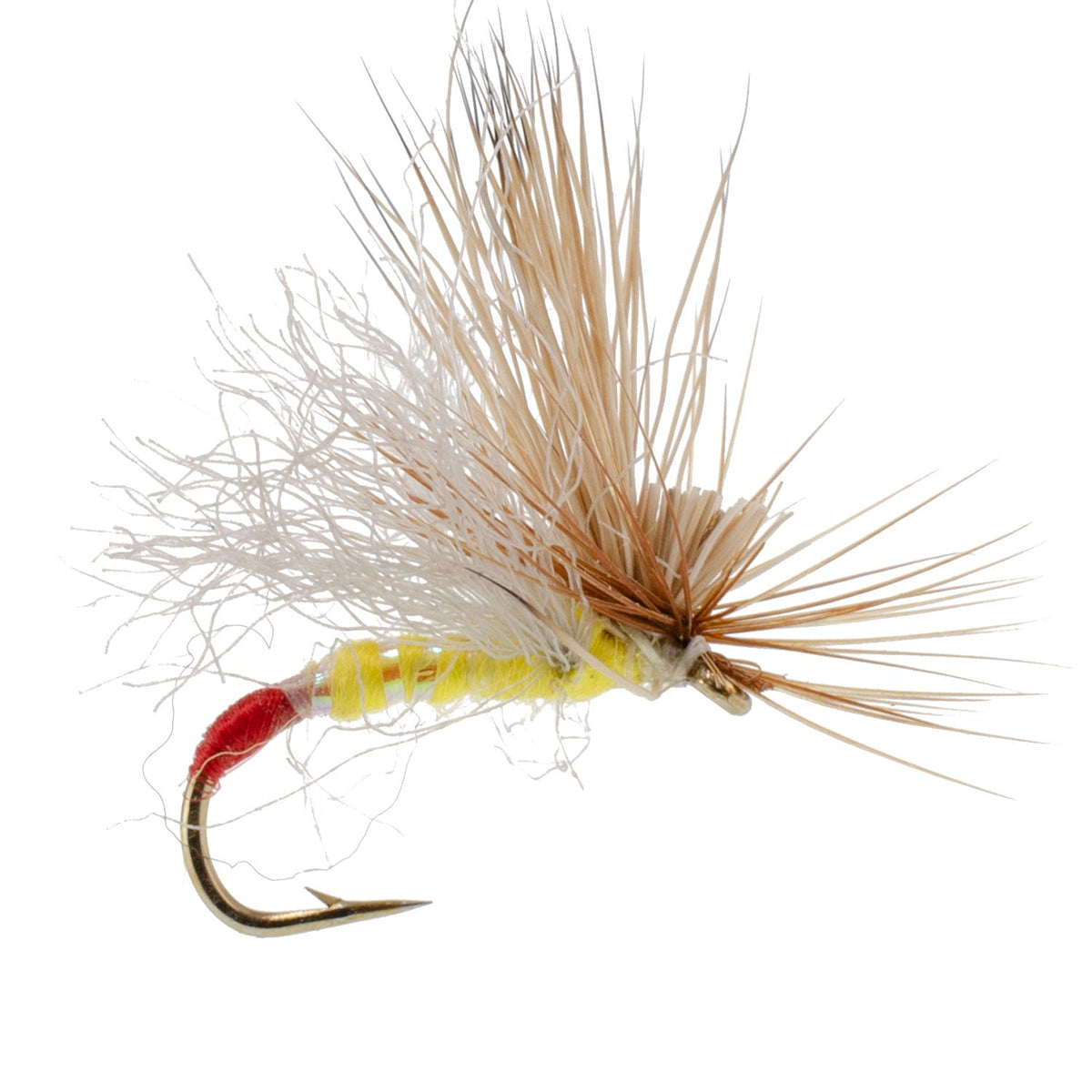
Try a lower-riding dry, an emerger, or a cripple that matches where the natural insects are sitting, on the surface, in the film, or just beneath it. If trout are feeding below the film, consider an appropriate subsurface imitation instead of repeatedly presenting a high-floating dry.
Cripple patterns became an important addition to my fly box after I tried them when Comparaduns and emergers weren't producing. The cripples did dramatically better. That experience gave me a reason to try a different profile in the surface film rather than keep switching between similar patterns.
Reassess riding height and feeding stage when a clean drift and a reasonable size match still produce refusals. Apply floatant according to the pattern and material. Coating a fly intended to sit partly below the surface can change the presentation you are trying to achieve.
When to Stop Casting and Watch
If the trout stops feeding after repeated presentations, pause. More casts may add disturbance without providing useful information. Watch whether the fish resumes its feeding position, whether insects are still drifting, and whether another food source has become more important.
The goal is not to force a take from every fish. It is to make a deliberate adjustment, present the fly cleanly, and learn from the response. Start with drift and angle, then work through tackle and pattern changes rather than emptying the fly box at random.
About the Author
Nick Nickens has 60 years of fly-fishing experience across the Rocky Mountain West, including many fall terrestrial seasons. He spent four years working as a fishing guide in the region and has tied thousands of flies commercially.