
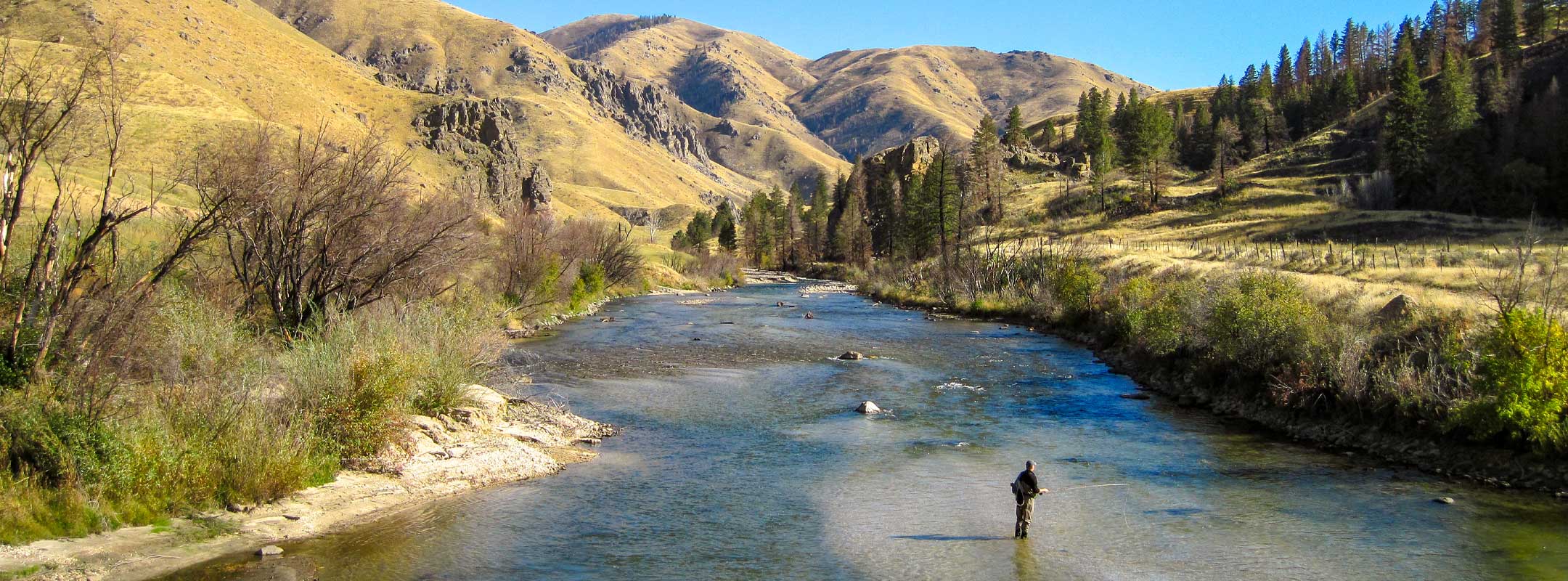
Tenkara fly fishing offers a streamlined approach to angling that prioritizes precision, portability, and connection to the water. This traditional Japanese method relies on a long telescopic rod, a fixed line tied directly to the tip, and a simple fly. No reel is involved. The result is a system well suited to small, high-gradient mountain streams where accuracy and delicate presentation matter more than distance.
A Brief History of Tenkara
Tenkara developed in the mountain regions of Japan more than four centuries ago. Commercial fishermen and hunters used it to catch native trout and char such as yamame, iwana, and amago in fast, clear streams. These anglers needed an efficient system that could be carried into remote areas and deployed quickly. Bamboo, abundant and light, formed the rods. Early rods were cut from single stalks and treated rather than split and glued like Western cane rods. The light material allowed rods of 10 to 15 feet or longer, giving reach without the weight that would have required a reel.
Lines were often made from horsehair or later from silk. Flies, known as kebari, were simple constructions of thread and local feathers. Patterns varied by region and available materials. One distinctive style that became associated with the method is the sakasa kebari, or reverse-hackle fly. The hackle is tied so the fibers slope forward toward the hook eye. When the fly is manipulated in the current, the soft fibers open and close, creating an inviting pulse that triggers strikes.
Written records of the method appear relatively late. British diplomat Ernest Satow noted artificial-fly fishing for iwana and yamame in the Japanese Alps during the late 1870s. Earlier Japanese sources mention fly fishing for other species, but the mountain-stream technique remained largely oral and practical until the twentieth century. Commercial use declined with modernization and pollution, yet the method survived among a small number of practitioners.
In the mid-twentieth century, writers such as Soseki Yamamoto and anglers including Dr. Hisao Ishigaki helped revive tenkara as a recreational pursuit. The term itself, once a regional word linked to flying insects or mountain fishing, became standardized to distinguish the fixed-line mountain style from other Japanese fly methods. Outside Japan the practice remained obscure until 2009, when Daniel Galhardo founded Tenkara USA and began importing and promoting rods, lines, and techniques suited to North American streams. Since then the method has spread among backpackers, small-stream anglers, and those seeking a lighter alternative to conventional fly gear.
Ethical Considerations in Tenkara
Tenkara’s simplicity carries ethical implications that align with careful stewardship of fisheries. The gear itself leaves a light footprint. A complete kit often weighs under 12 ounces and collapses into a package the size of a short hiking pole. This encourages travel into remote headwaters on foot rather than by vehicle, reducing pressure on more accessible waters. Because the system is designed for short, controlled presentations, it favors precise casting over repeated long drifts that can disturb entire pools.
Modern practitioners commonly adopt catch-and-release practices, especially on wild native populations. Barbless hooks or pinched barbs make release faster and less damaging. Water temperature awareness is essential: trout experience high stress above roughly 65 to 68 degrees Fahrenheit, and prolonged fights or air exposure compound the risk. A thermometer and a short fight become practical ethical tools.
Stream etiquette forms another layer. Give space to anglers already on the water. Park thoughtfully and walk upstream or downstream rather than crowding popular access points. Avoid asking for specific fly patterns or exact locations when someone is focused on fishing. These unwritten rules preserve solitude and reduce cumulative impact.
Debates within the tenkara community sometimes arise over purity of method versus broader fixed-line applications. Some anglers restrict the term to trout in high-gradient streams with traditional kebari. Others adapt the rods to bass, panfish, or larger rivers. An ethical stance prioritizes mutual respect over rigid definition. The shared values of minimal gear, careful fish handling, and habitat awareness matter more than gatekeeping. Supporting native fish populations, opposing unnecessary stocking that harms wild genetics, and practicing leave-no-trace principles complete the ethical framework.
Practical Advice: Gear and Setup
A typical beginner setup follows a practical “rule of twelves”: a rod near 12 feet, a line of similar length, tippet of a few feet, and a size 12 fly. Carbon-fiber telescopic rods range from about 10 to 14 feet when extended and collapse to 15 to 25 inches. Weight usually falls between 2 and 4 ounces. Action is often described by the ratio of stiff to soft sections; a 6:4 action (six stiffer base sections, four softer tip sections) provides a balance of casting ease and fish-fighting flex. Soft tips protect light tippet while still transmitting strikes.
Two main line types exist. Level fluorocarbon lines in weights 3 to 5 are popular for visibility and sensitivity. Tapered lines, sometimes woven, cast more easily for beginners but may be less sensitive. Start with a line roughly the length of the rod. Add 3 to 4 feet of tippet in 4X to 6X diameter. Thinner tippet reduces drag and protects the rod tip if a snag or large fish occurs. High-visibility orange or yellow level line helps track the fly and detect subtle takes.
Flies need not be elaborate. The classic sakasa kebari uses a standard wet-fly or dry-fly hook (sizes 12 to 16), a thread body, and a soft hackle such as partridge or hen pheasant tied reverse. Many Japanese anglers fish one or two patterns all day, changing only presentation. Western soft-hackles or simple nymphs also work. Carry a small box with a few sizes and colors.
Setup is straightforward. The rod tip ends in a short soft braid called a lillian. Attach the line with a girth hitch or a specialized lillian knot that cinches securely yet releases easily. Tie tippet to the line with a triple surgeon’s knot or a tippet ring for quick changes. Attach the fly with an improved clinch or similar reliable knot. Always extend the rod from the tip section outward and collapse it the reverse way to avoid jamming or breakage. Keep the tip protected inside the handle section when attaching or removing line.
Casting and Presentation Techniques
Casting a tenkara rod requires less power than a conventional fly rod. Grip the handle with the index finger on top, hand at the very butt for maximum leverage. Stand with the casting-side foot slightly forward. The stroke is compact: raise the rod with a short, crisp motion of the forearm and wrist until the tip points near vertical (roughly 12 o’clock). Pause briefly so the line straightens behind, then accelerate forward and stop the tip slightly above the horizontal. The light line turns over with minimal force. Overpowering is the most common beginner error; reduce effort until the cast feels almost effortless.
Once the fly lands, several presentations prove effective. Dead drift lets the fly float or sink naturally with the current while the rod tip tracks it to keep the line off the water and eliminate drag. Pulsing involves gentle lifts and drops of the rod tip so the reverse hackle opens and closes like a living insect. Pause techniques hold the fly stationary for a moment above a likely lie before allowing a short drift. Across-and-down swings can also trigger strikes when fish are less selective.
Line control is the core skill. Keep most of the line and tippet off the surface. The long rod makes this possible even in tight quarters. For very brushy streams the bow-and-arrow cast works well: hold the fly, flex the rod, and release to shoot the line forward under overhanging branches.
On-Stream Tips and Common Challenges
Start on smaller streams where the fixed line length matches the scale of the water. Practice knots until they are automatic; a failed knot loses more fish than any other single factor. Carry a spare line and tippet. When a fish is hooked, raise the rod and use its flex to absorb runs rather than trying to reel. Guide the fish to a quiet spot for landing. Wet hands, support the body, and release promptly.
Snags are inevitable. Point the rod tip at the snag and pull straight back so the tippet breaks before the rod tip does. In windy conditions a slightly heavier line or shorter tippet helps maintain control. Clear water and selective fish call for longer, finer tippet and careful upstream approaches.
Many anglers find that tenkara improves their overall fishing intuition. The absence of a reel forces attention to current seams, micro-habitats, and subtle takes. The same principles of presentation and ethics transfer readily to conventional fly fishing when desired.
Closing Thoughts
Tenkara remains a living tradition that balances historical roots with modern practicality. Its history roots it in the resourceful mountain culture of Japan. Its ethics encourage light impact and respect for wild fish and fellow anglers. Its practical system rewards careful observation and refined technique over complex gear. Whether used for a day trip on a local brook or as ultralight equipment on a multi-day backpack, the method rewards those who approach it with curiosity and care. Start simple, practice the fundamentals of cast and presentation, and let the streams themselves provide the ongoing lessons.