Madison River Hebgen Lake to Ennis Montana Hatch Chart
Southwest Montana. The Madison exits Yellowstone National Park at the west entrance and flows north through the Hebgen Lake reservoir system before resuming as a freestone river below Quake Lake. From there it runs roughly 50 miles through open ranch country and the Madison Valley to Ennis Lake, passing through the town of Ennis along the way.
This is big, fast, wade-able freestone water - riffle-heavy with long gravel runs, undercut banks, and productive side channels. Brown trout dominate the lower valley; rainbows are more common in the upper stretches below Quake Lake. Fish average 14-18 inches with trophy browns taken regularly, particularly in fall. The Madison is a blue-ribbon fishery and sees heavy float traffic in summer - wading pressure is highest near Ennis and at the main access points.
Check current Montana Fish, Wildlife and Parks regulations before you go. From Quake Lake downstream to Varney Bridge: catch-and-release for all trout, artificial lures and flies only - young anglers may have a printed exception, read the pamphlet. From Varney Bridge downstream to Ennis Lake: catch-and-release for rainbow trout, brown trout follow the printed harvest limit, artificial lures and flies only with barbless single-point hooks. Fishing from a boat or vessel is closed from Quake Lake to Lyons Bridge and from Ennis Bridge to Ennis Lake - you may float those reaches for access and get out to wade, the Lyons Bridge to Ennis Bridge water is the standard float-fishing stretch. The Madison in Montana is open year-round. Hebgen Lake above the dam has its own season and limits. Watch for summer hoot-owl closures. A Montana fishing license is required.
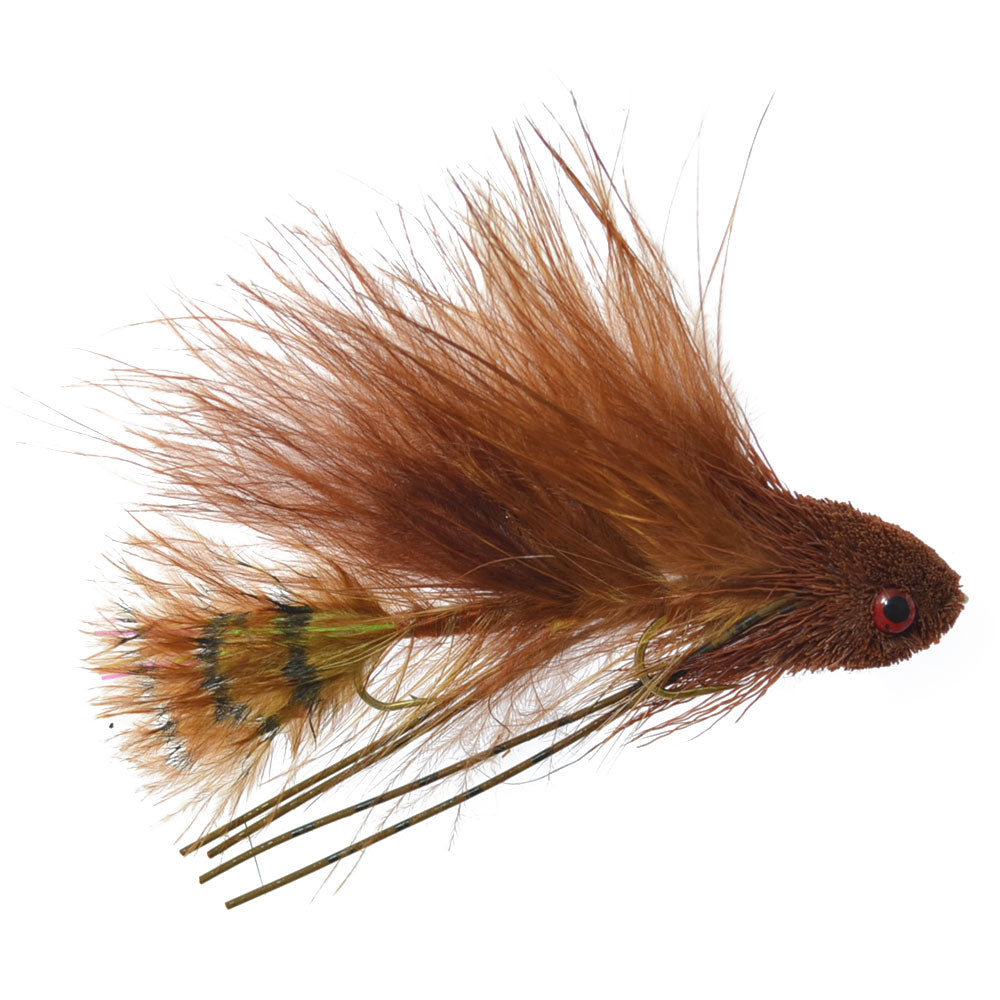
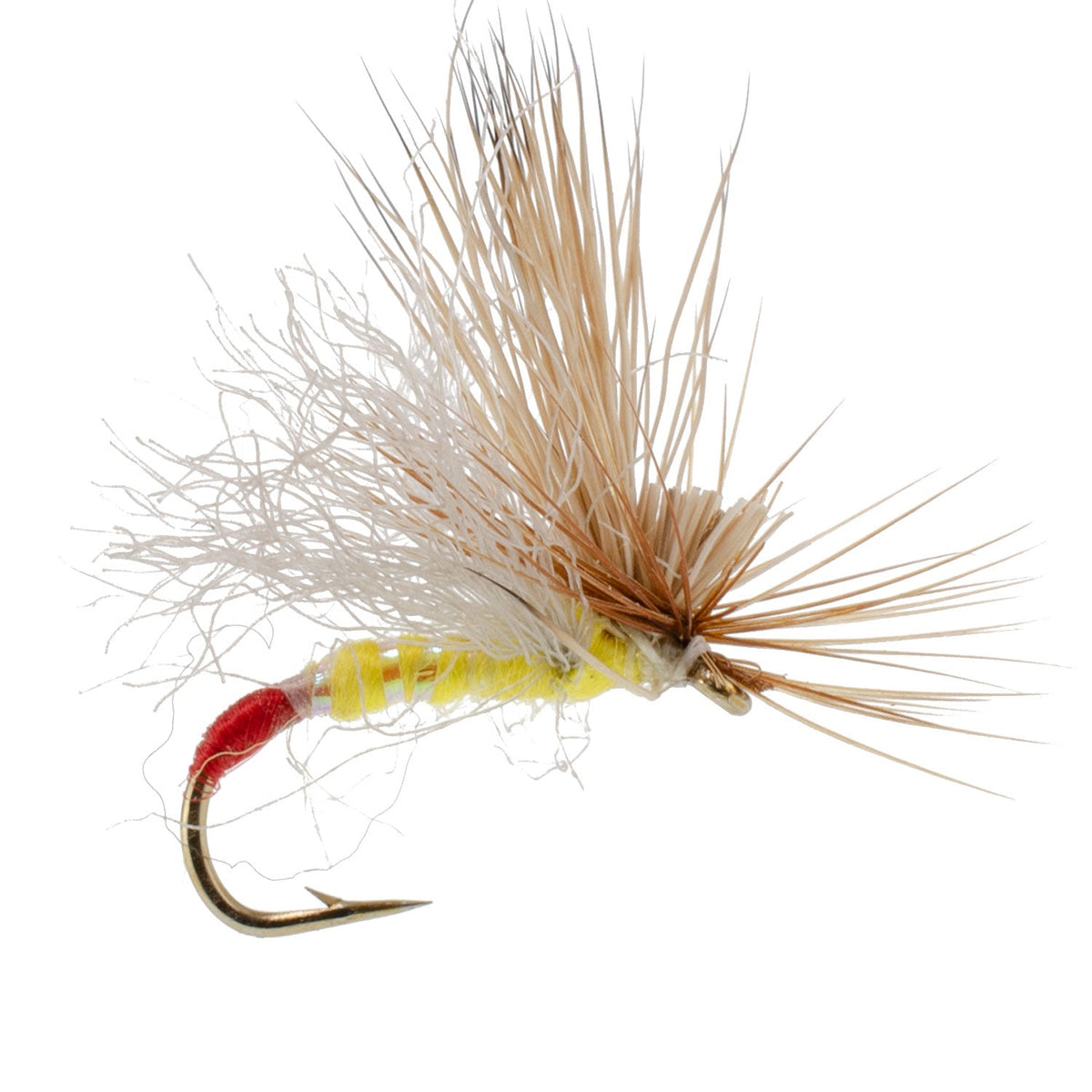
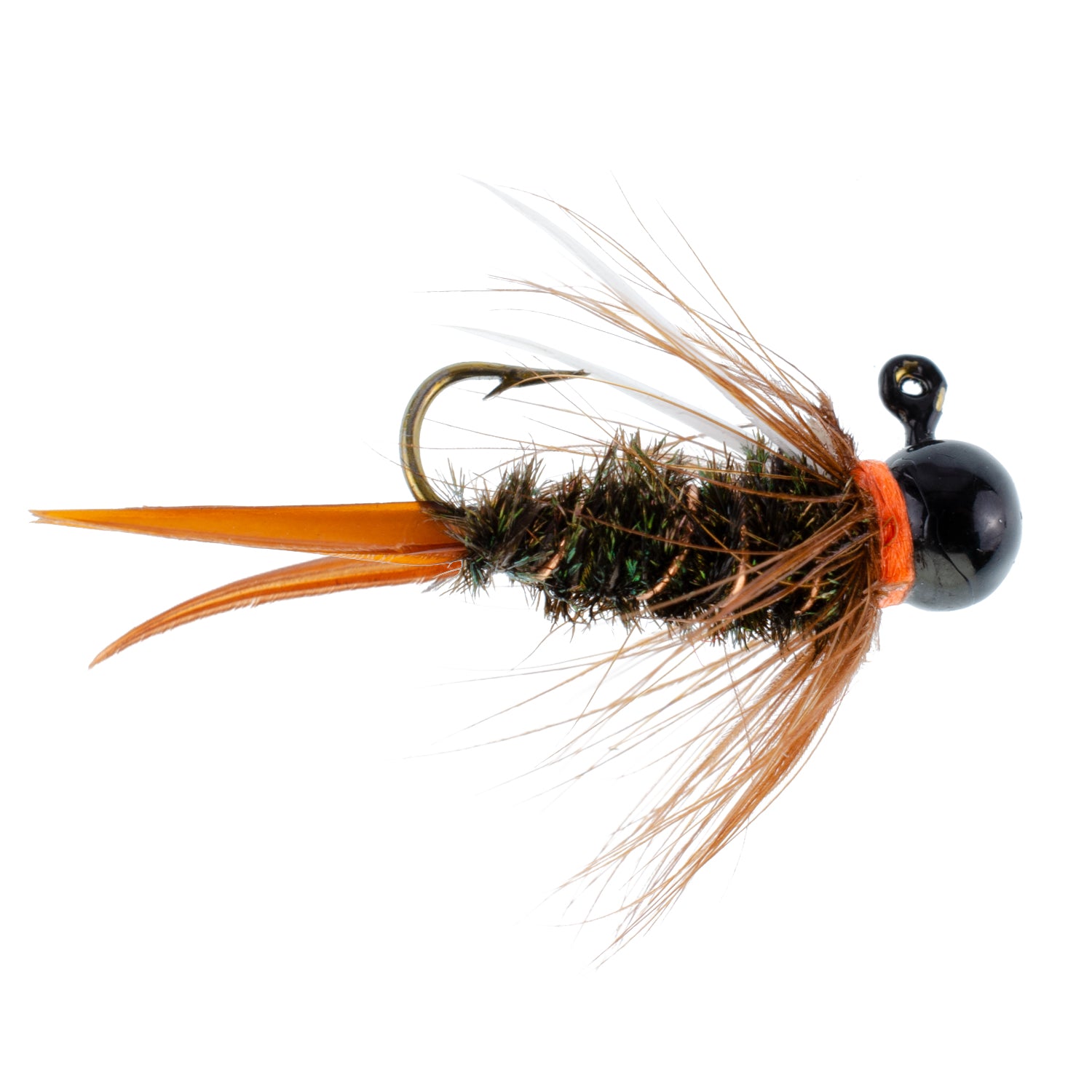
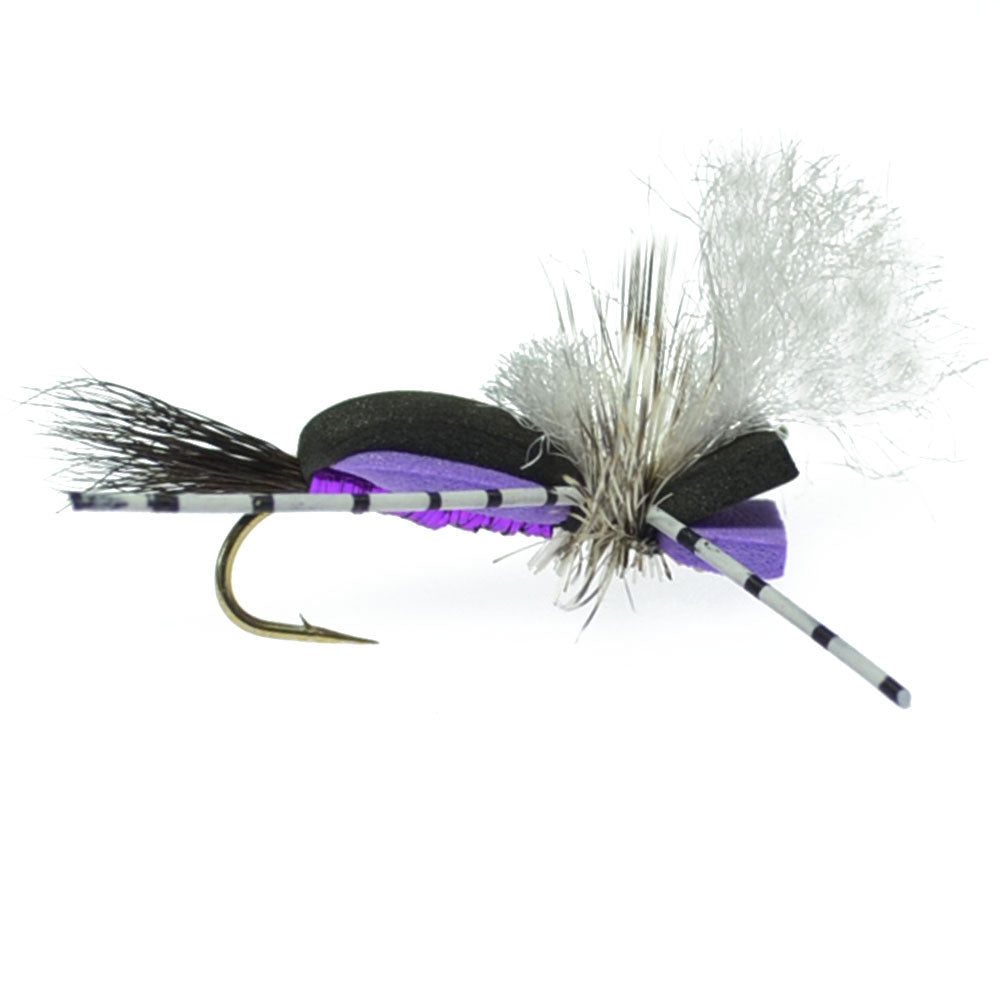
Shop by type: dry flies, nymphs, Euro nymphs, hoppers and terrestrials, streamers.
Year at a glance
| Month | Primary hatches | Also carry | Typical sizes |
|---|---|---|---|
| Jan | Midges | BWO on mild days, stonefly nymphs | Midge 18-22 |
| Feb | Midges, BWO | Small dark stonefly nymphs | Midge 18-22, BWO 16-20 |
| Mar | BWO, midges | Stonefly nymphs, streamers | BWO 16-20, midge 18-22 |
| Apr | BWO, March brown | Early caddis, streamers | BWO 12-18, caddis 14-16 |
| May | Caddis, BWO | Stonefly nymphs, runoff mid-month | Caddis 14-16, BWO 16-20 |
| Jun | Salmonfly, golden stone, caddis | PMD late month | Stone 4-10, caddis 14-16 |
| Jul | PMD, caddis, yellow sally | Trico start, early hoppers | PMD 16-18, hopper 8-12 |
| Aug | Hoppers, trico, caddis | Ants, beetles, late PMD | Hopper 8-12, trico 20-22 |
| Sep | Hoppers, BWO, mahogany dun | Streamers for pre-spawn browns | BWO 16-20, hopper 8-12 |
| Oct | BWO, mahogany dun, October caddis | Midges, streamers | BWO 18-22, caddis 8-12 |
| Nov | BWO, midges | Streamers for post-spawn browns | BWO 18-22, midge 18-22 |
| Dec | Midges | Small nymphs, streamers | Midge 18-22 |
January - February
Cold and slow. The Madison fishes year-round below Quake Lake. Midges are the main food source - fish are concentrated in the deeper, slower runs and the warmer tailouts below riffles. Olives begin on overcast February afternoons and midge adults cluster in back eddies. The lower valley near Ennis can fish well on calm winter days - midday is the window.
- Midges - 18-22. Two-fly rig through the slower runs and tailouts. Small dark stonefly nymphs along the bottom in the faster water.
- BWO - 16-20 on overcast February afternoons. Parachute and CDC emerger styles.
- Pheasant tail nymphs subsurface for Baetis through both months.
March - April
BWO pick up as days lengthen. No Skwala hatch to speak of on this stretch - the Madison runs cold longer than Rock Creek. Streamer fishing for pre-runoff browns can be strong in March, particularly in the lower valley. April adds March brown and early caddis before runoff builds toward month's end - fish the early part of April before flows push, then work the edges, side channels, and clear tributary mouths.
- BWO - 16-20 on overcast afternoons through March and April. Parachute and CDC emerger styles.
- Streamers - olive and black, swung through the deeper runs for active browns. Best pre-runoff window through March.
- April: March brown 12-18 on cloudy afternoons, early caddis 14-16 at dusk.
May - June
Caddis hatches can be excellent in early May before runoff peaks. Mid-month the river typically blows out - often dirty well into June depending on snowpack. Fish the edges, side channels, and clear tributary mouths when the main river is pushing. The salmonfly hatch is the event that defines the Madison's reputation. As flows drop and clear - usually mid-to-late June - the hatch moves upstream from the lower valley toward Quake Lake. Timing the leading edge is everything. Golden stones follow and extend the big-bug fishing into early July. Book early - this stretch draws anglers from across the country during the salmonfly window.
- May: caddis - 14-16 early in the month. Stonefly nymphs 6-10 before and during runoff. BWO on overcast days when flows allow.
- June: salmonfly - 4-8 hard against undercut banks and woody debris. Fish the leading edge upstream of where adults are thick.
- Golden stone - 6-10. Overlaps and follows the salmonfly. Stone nymph dropper below a large dry.
- Evening caddis - 14-16 throughout June.
- Late June: PMD - 16-18 in the riffles.
July - August
Outstanding summer dry-fly fishing on one of the best hopper rivers in Montana. PMDs in the morning, caddis evenings, hoppers building along the valley grass through July. The river sees its highest float traffic - wade anglers should target early morning and evening and focus on sections away from the main launch sites. Trico spinner falls begin on the flatter sections near Ennis late July and dominate August mornings. Fish early through August - afternoon winds can pick up in the valley and make casting difficult.
- July: PMD - 16-18 mornings. Yellow sally 14-16 in the faster riffles.
- Caddis - 14-16 evenings through July and August.
- Hoppers - 8-12 along the valley grass from mid-July through August. Hopper-dropper with a small nymph is the standard rig.
- Trico - 20-22 early morning on the flat sections near Ennis. Begins late July, peaks in August.
- Ants and beetles in foam lines and along the grassy banks midday.
September - October
One of the great months on the Madison. Hoppers hold through mid-September. Mahogany duns and olives arrive in the afternoon. Brown trout begin staging ahead of the spawn - the largest fish of the year move into shallower feeding lanes and respond aggressively to both dries and streamers. Crowds drop sharply after Labor Day. October adds October caddis and extends the streamer season through the pre-spawn peak. Handle spawning fish carefully and avoid walking on active redds.
- Hoppers and ants through mid-September.
- BWO - 16-20 on overcast afternoons through September and October. Parachute and CDC emerger styles.
- Mahogany dun - 14-16 on gray afternoons through September and October.
- October caddis - 8-12 on warmer October afternoons.
- Streamers at first and last light through September and October for staging and pre-spawn browns.
- Midges in the slow water through October.
November - December
Spawning winds down and cold mornings and short days settle in. BWO and midges in the warmest part of the November afternoon. Post-spawn browns hold in the deeper runs and respond to streamers swung slowly through slower water. December returns to the midge and nymph program - low, clear water and selective fish require fine tippet and a careful approach on the wade water near Ennis.
- BWO - 18-22 on mild overcast November afternoons. Parachute and CDC emerger styles.
- Midges - 18-22 throughout both months. Two-fly rig through the slower, deeper runs.
- Streamers - swung through the slower, deeper water for post-spawn browns through November.
- Small nymphs through the holding runs.
A western dry and nymph assortment covers the year. Add salmonfly patterns for June, hoppers and terrestrials for the summer season, trico patterns for August, mahogany duns and October caddis for fall, and a streamer selection for the complete Madison experience.