South Platte River Colorado Hatch Chart
North-central Colorado. The South Platte is Colorado's most celebrated trout fishery — a tailwater and freestone system that runs from the high South Park basin down through a series of deep, granite canyons before spreading into the Front Range foothills. Four distinct reaches draw anglers from across the country, each with its own character, regulations, and access.
The four sections
Dream Stream — South Park (Spinney Mountain to Elevenmile Reservoir)
High-altitude meadow water at 9,000 feet, slow and spring-creek-like in character. Home to some of the largest brown and rainbow trout in Colorado — fish over 20 inches are common, with genuine trophy fish present. Wide, flat, and open; technical dry-fly and nymphing water where a careful approach matters more than anywhere else on the river. The Dream Stream sits at the top of the drainage and runs colder and later in spring than the canyon sections below. Check current Colorado Parks and Wildlife regulations — slot limits and specific gear rules apply.
Eleven Mile Canyon
Below Elevenmile Reservoir, the river drops into a narrow granite canyon with pocket water, riffles, and deep pools. Rainbows and browns, good access along the canyon road, and a diverse hatch calendar. Less technical than Cheesman but still rewards careful presentation. Regulations vary by section — confirm before you go.
Deckers
One of Colorado's most heavily fished trout reaches, located below Cheesman Canyon where the river opens into a broad valley. Walk-in access and easy wading make it popular. Rainbow and brown trout in good numbers. Fly-fishing-only and catch-and-release sections exist alongside general regulations water — know which section you're on. Best early mornings and weekdays to avoid pressure.
Cheesman Canyon
The most remote and technical section. A walk-in-only wilderness canyon below Cheesman Reservoir with large, educated rainbows and brown trout that have seen every pattern in the book. Long leaders, fine tippet, precise presentations, and early starts. The canyon is catch-and-release, fly-fishing only. The reward is exceptional fish size and, on off-peak days, genuine solitude. Considered by many to be among the best tailwater fisheries in the Rocky Mountain West.
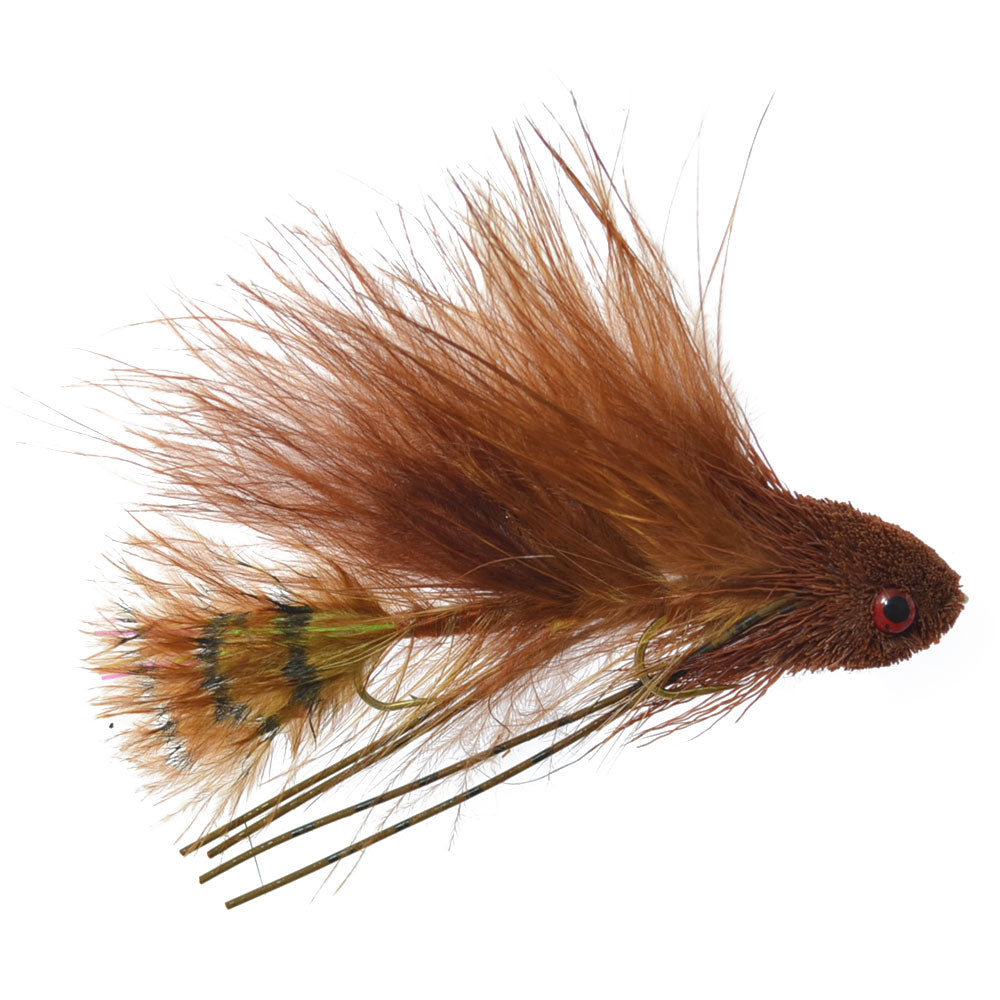
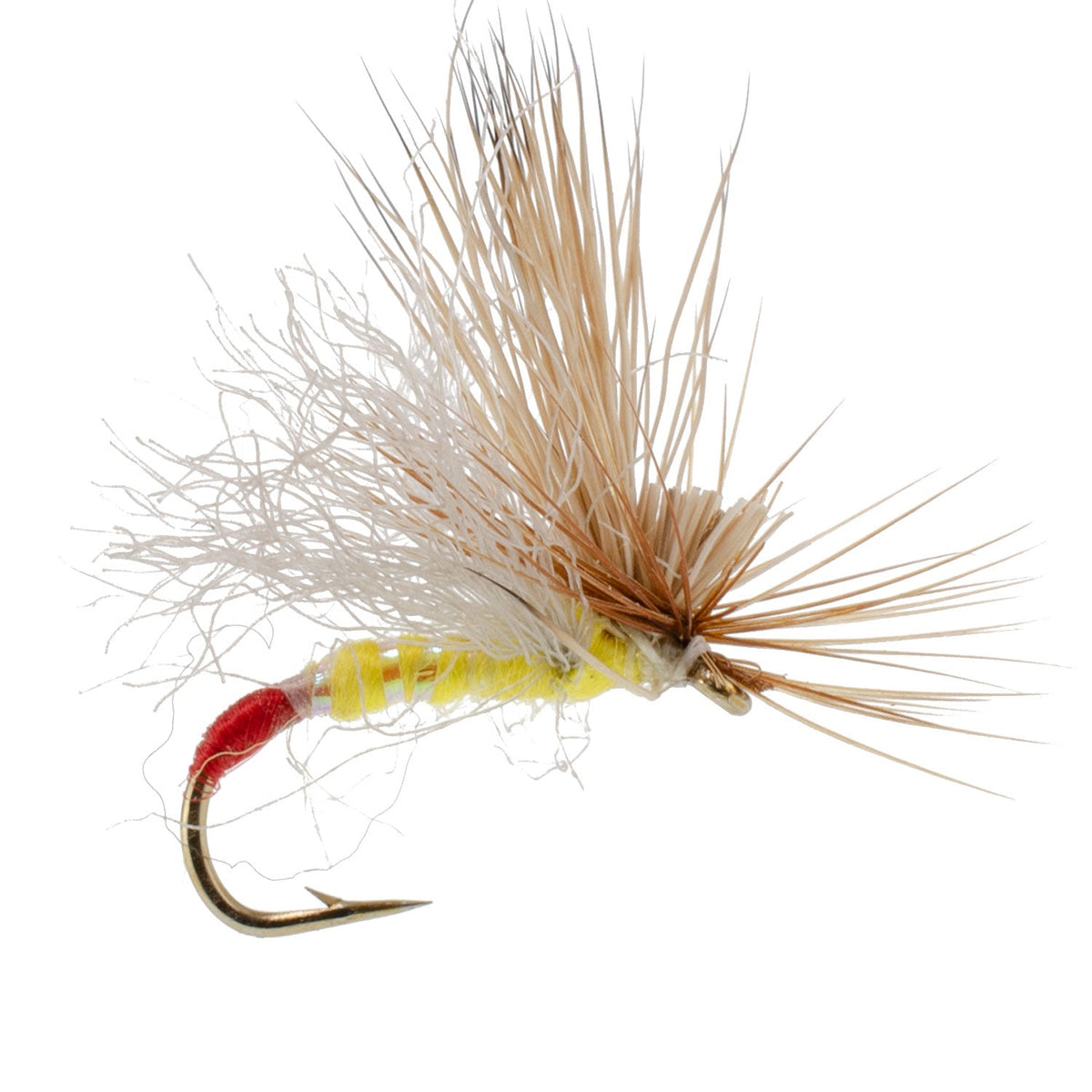
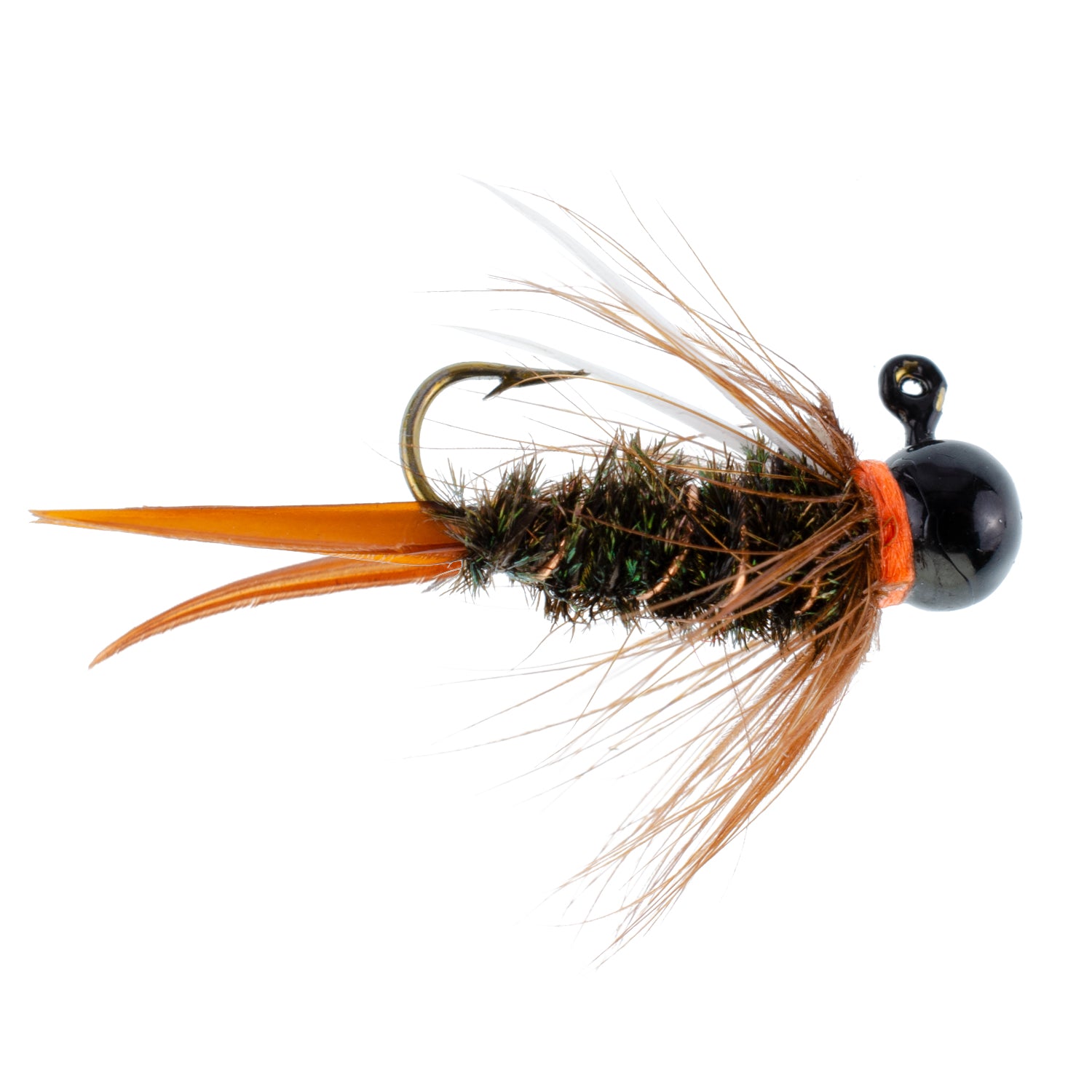
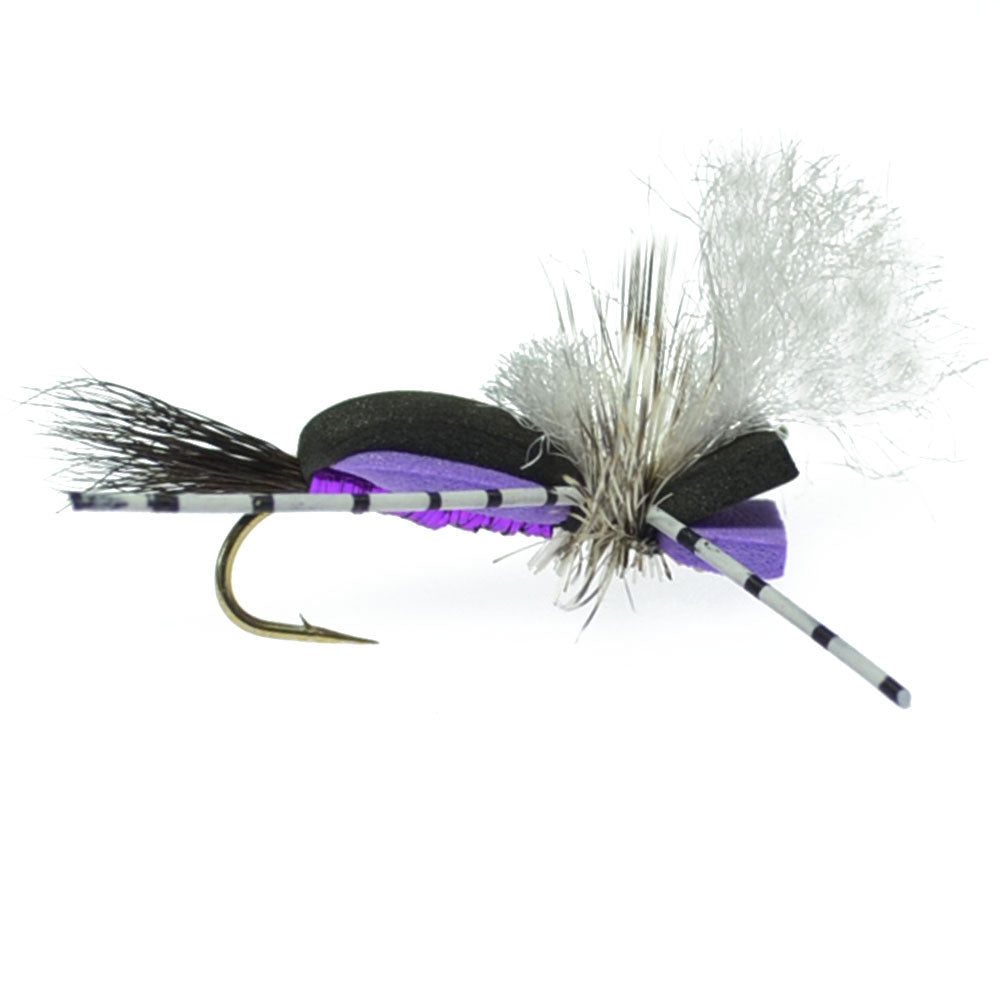
Shop by type: dry flies, nymphs, Euro nymphs, hoppers and terrestrials, streamers.
Year at a glance
| Month | Primary hatches | Also carry | Typical sizes |
|---|---|---|---|
| Jan | Midges | BWO on mild days | 20-24 midge, 20-22 BWO |
| Feb | Midges, BWO | Small stonefly nymphs | 18-24 |
| Mar | Midges, BWO | Early caddis start on warmer days | 18-22 midge, 18-20 BWO |
| Apr | BWO, midges, caddis | March Brown, early PMD | 16-22 |
| May | Caddis, PMD, BWO | Golden stonefly nymphs | PMD 16-18, caddis 14-16 |
| Jun | PMD, caddis, golden stone | Yellow sally, BWO | PMD 16-18, stones 8-12 |
| Jul | PMD, caddis, yellow sally | Hoppers, tricos start | 14-18 |
| Aug | Tricos, hoppers, caddis | Ants, beetles, late PMD | Trico 20-24, hopper 8-12 |
| Sep | BWO, tricos, hoppers | Mahogany dun, streamers | 18-22 BWO, trico 20-24 |
| Oct | BWO, midges, mahogany dun | Streamers for browns | 18-22 |
| Nov | Midges, BWO | Small nymphs, streamers | 20-24 |
| Dec | Midges | BWO on mild days | 20-24 |
January
The South Platte fishes year-round and January is prime midge season. Cheesman and Deckers can produce outstanding dry-fly action on calm, sunny afternoons when midge clusters bring large fish to the surface. The Dream Stream is often iced over or locked in winter conditions — focus on the canyon sections. Go small and go fine.
- Midges - 20-24. The South Platte demands smaller patterns than most western rivers. A zebra midge in size 20-22 is a starting point — go smaller in Cheesman. Fish a two-fly midge rig under an indicator or tight-line through slow tailouts.
- BWO - 20-22 on overcast afternoons. A sparse BWO dry when fish are visibly rising.
February
Same midge program with increasing BWO activity. Cheesman fish begin to show more interest in surface flies as days lengthen. The canyon walls trap warmth and midday temperatures can be surprisingly comfortable — one of the better winter months on the system.
- Midges and BWO on gray afternoons.
- Pheasant tail nymphs — sized down to 18-20 — for Baetis nymphs subsurface.
- Small dark stonefly nymphs along the bottom.
March
One of the best months on the South Platte. Midge hatches remain strong. BWO pick up significantly on overcast days. Cheesman Canyon in March is a destination experience — large fish rising to tiny flies in dramatic scenery, with few other anglers. Early caddis begin appearing on warmer afternoons by late month.
- Midges - 20-24. The workhorse. Fish larvae and pupae subsurface, adults on the surface when fish are rising.
- BWO - 18-22. BWO dry and Barr's Baetis emerger.
- Late March: early tan caddis on warmer afternoons.
April
Spring arrives in the canyons. Caddis become more reliable. BWO continue on cloudy days. The Dream Stream begins to thaw and early-season fishing opens up in South Park, though hatches run two to three weeks behind the lower canyons at elevation.
- Caddis - 14-18. Tan and dark caddis on warm afternoons. Elk hair caddis and the caddis assortment.
- BWO and midges on overcast days.
- Early March Brown - 14-16 on the larger sections.
May
Peak spring fishing. PMDs begin in earnest, caddis hatches build, and BWO continue on gray days. The canyon sections are at their best. Runoff can affect the Dream Stream and upper reaches — the tailwater canyon sections below the reservoirs remain fishable year-round regardless of runoff conditions above.
- PMD - 16-18. Pale Morning Dun mornings. A pheasant tail dropper underneath covers the nymph stage.
- Caddis - 14-16 in the afternoons and evenings. Elk hair.
- BWO on overcast mornings.
- Golden stonefly nymphs 8-12 from nymphs in faster water.
June
Excellent fishing across all sections. PMDs and caddis dominate the canyon reaches. Golden stones are present in Eleven Mile and the lower canyon. The Dream Stream in June is outstanding once flows settle — large fish feeding actively in the meadow channels. Yellow sallies add a third dry-fly option in the riffled sections.
- PMD - 16-18. Pale Morning Dun with a pheasant tail dropper.
- Golden stone - 8-12. Stimulator-style dry along banks, stone nymph as dropper.
- Yellow sally - 14-16 in riffled sections.
- Evening caddis. Elk hair.
July
PMDs continue into mid-July. Tricos begin on the slower sections — Dream Stream trico fishing is among the best in Colorado. Hoppers start along the meadow edges of the Dream Stream and Deckers valley water. The canyon sections fish best early morning and evening as heat builds mid-day.
- PMD mornings - Pale Morning Dun.
- Trico - 20-24. Early morning spinner falls on flat, slow water. Fine tippet essential. Especially productive on the Dream Stream.
- Early hoppers along meadow edges — hoppers and terrestrials.
- Evening caddis. Elk hair.
August
Trico spinner falls are the signature hatch of high summer on the South Platte — technical, rewarding, and unique to the slower sections. Hoppers work the Dream Stream and Deckers meadow banks. Afternoon thunderstorms are common at elevation; fish early and be off exposed water by early afternoon.
- Trico - 20-24. The most important August hatch. Morning spinner falls bring large fish to the surface on the Dream Stream and slower Deckers sections. Small, spent-wing patterns on 6X or 7X tippet.
- Hoppers - 8-12. Dream Stream and Deckers meadow banks. Shop hoppers and terrestrials.
- Ants and beetles in foam lines and along grassy banks.
- Late PMD on cool mornings in the canyon.
- Evening caddis.
September
Outstanding month across all sections. BWO return strongly as nights cool. Tricos continue on the Dream Stream into early September. Hoppers hold through mid-month. Brown trout begin showing pre-spawn aggression — streamer fishing picks up in the canyon sections and below Cheesman. One of the least-crowded months with some of the best conditions of the year.
- BWO - 18-22. Parachute BWO and Baetis emerger.
- Tricos through mid-September on the Dream Stream.
- Hoppers and ants through mid-September on meadow sections.
- Mahogany dun - 14-16 on overcast afternoons.
- Streamers for pre-spawn browns in canyon runs and deeper pools.
October
Fall BWO fishing is some of the best of the year on the South Platte — dense hatches on gray afternoons, selective fish, and few other anglers. Mahogany duns add a second dry-fly option. Brown trout are in or approaching the spawn — handle carefully. Cheesman Canyon in October is exceptional for large fish on small flies.
- BWO - 18-22. The dominant hatch. Sparse patterns, fine tippet, accurate casts.
- Mahogany dun - 14-16 on overcast afternoons.
- Midges - 20-24 in slow tailouts.
- Streamers for brown trout in the canyon and below Cheesman.
November
Back to the midge and olive program. The crowds are gone entirely. Cheesman Canyon in November rewards the angler willing to make the hike — big fish, small flies, dramatic scenery, and solitude. The Dream Stream typically closes or becomes inaccessible with early snow.
- Midges - 20-24. Two-fly rig through slow water.
- BWO on overcast afternoons, 18-22.
- Small nymphs — sized down to 18-20.
December
Midge season. The canyon sections fish year-round. Focus on Cheesman and Deckers; Eleven Mile and the Dream Stream may be inaccessible. A calm, mild December afternoon in Cheesman with rising fish can be as good as any day on the river.
- Zebra midge and small nymphs - 20-24.
- BWO on mild, overcast afternoons.
A South Platte box starts with a deep midge selection in sizes 18-24 and a strong BWO assortment. Add PMDs, trico patterns, caddis, and hoppers for the summer season. Start with the western dry and nymph assortment and supplement with smaller sizes than you'd fish anywhere else.